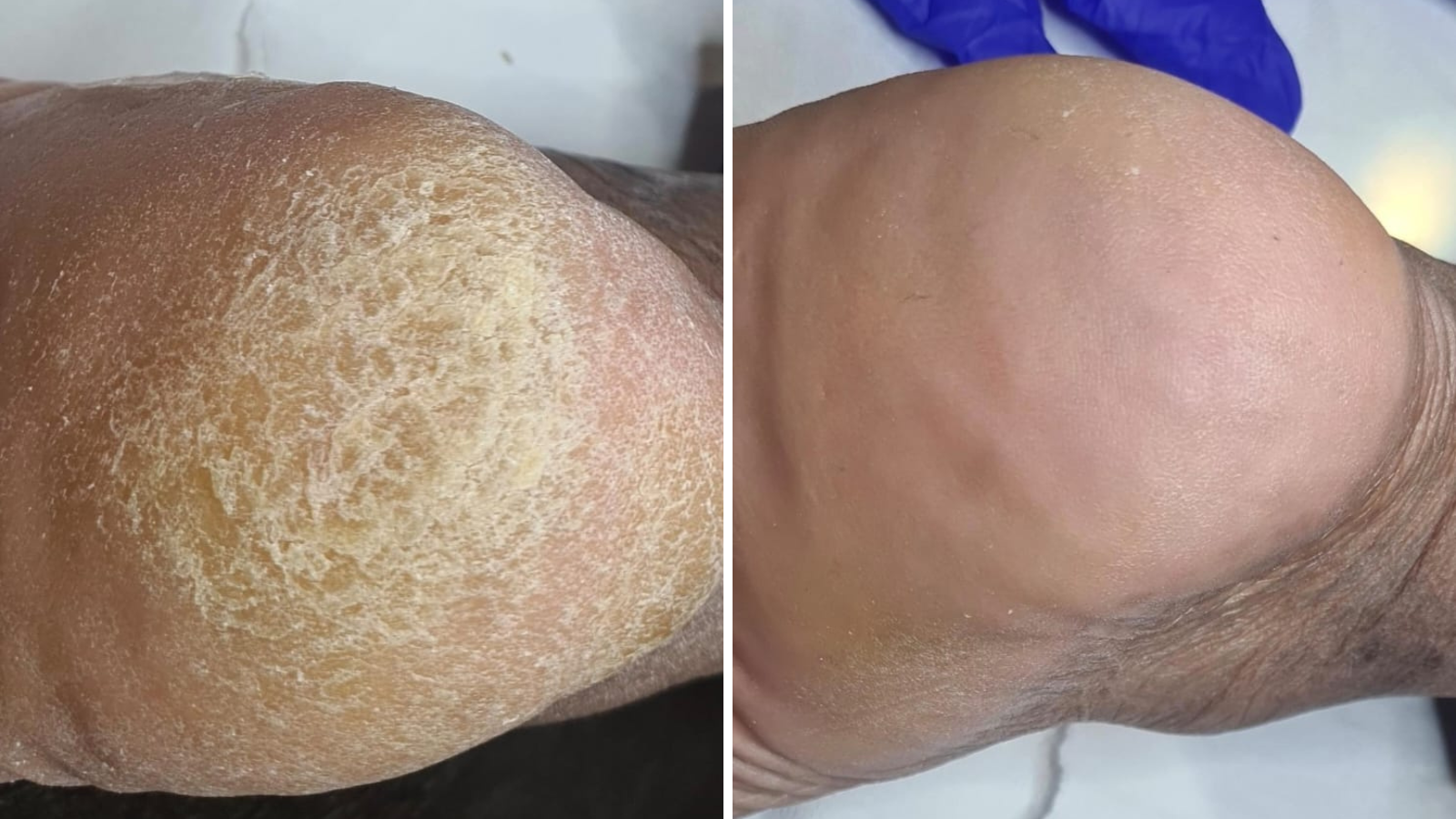
Summer means sandals, holidays and bare feet, but it also means cracked heels become much more common.
What do cracked heels look and feel like?
Cracked heels often start as dry, rough, thickened skin around the edge of the heel. As the skin loses moisture and elasticity, deep cracks (called fissures) can develop. They may feel tight, sore and uncomfortable, and can become very painful to walk on as they split further with every step.
Why do they occur, especially in summer?
- Wearing open-backed sandals leaves the heel unsupported, allowing the skin to spread sideways under pressure.
- Warm weather, dry heat and dehydration reduce the skin's moisture, making it less elastic and more likely to crack.
- Increased walking on holiday, hard floors around pools and going barefoot can all make the problem worse.
Many people are concerned about how cracked heels look cosmetically, but they are much more than a cosmetic issue.
As cracks deepen they can bleed, become extremely painful and provide an entry point for bacteria. This can lead to infection and, in some cases, serious complications such as cellulitis, which is always best prevented rather than treated.
If you have diabetes, don't ignore cracked heels.
People with diabetes are at greater risk because raised blood glucose can affect collagen, making the skin drier and less elastic. Some people also develop reduced sweating due to nerve damage (autonomic neuropathy), resulting in very dry skin. Combined with reduced circulation, slower healing and loss of sensation, even a small crack can become a significant problem.
How can we help?
At Essex Footcare we can:
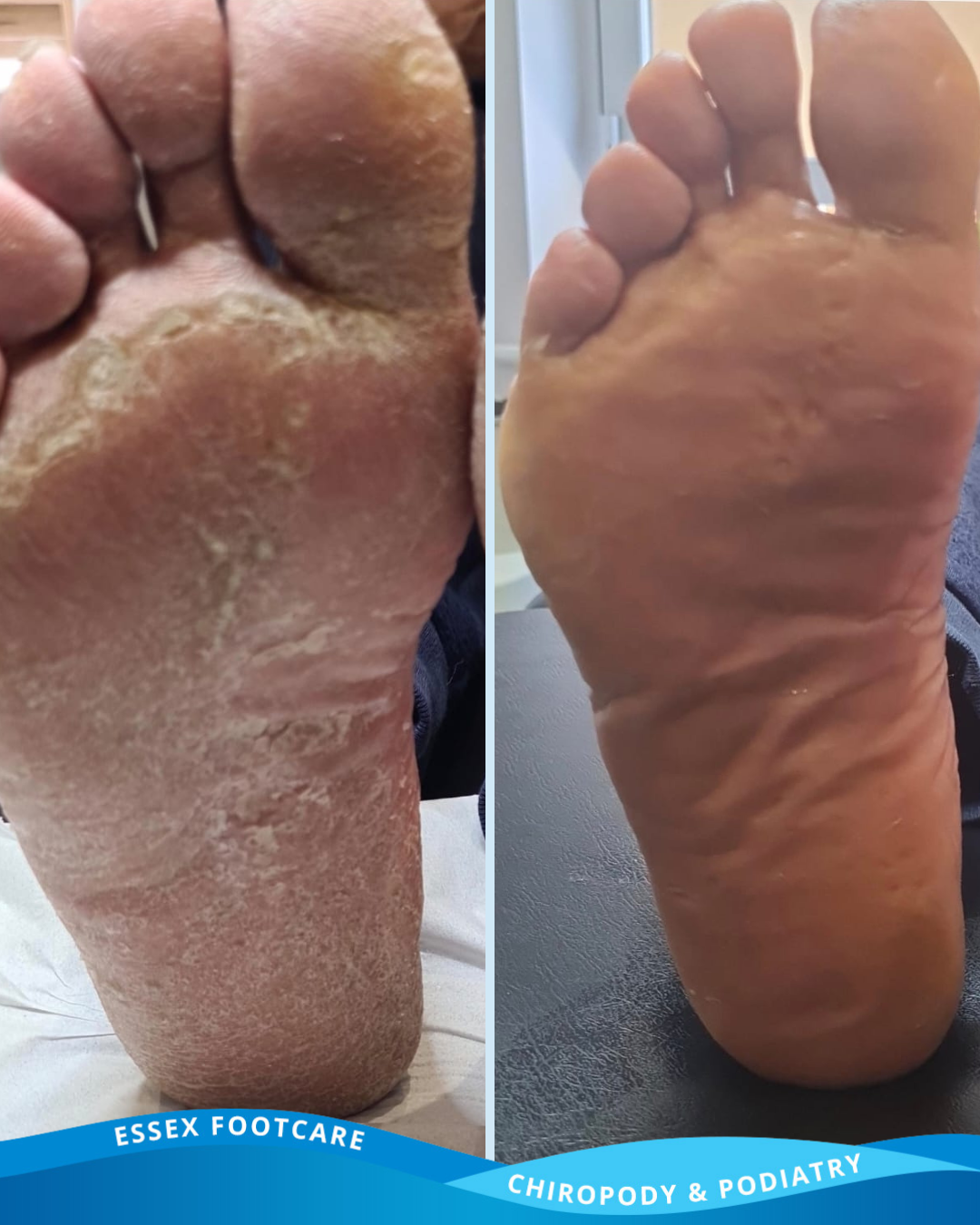
- Safely remove hard skin using sterile podiatry instruments.
- Reduce painful fissures and encourage the skin to heal.
- Recommend the most appropriate emollient or heel balm for your skin type to improve hydration and restore elasticity.
- Assess your footwear and suggest ways to reduce pressure on the heel, including improving shock absorption where appropriate.
What shouldn't you do?
Please avoid DIY treatments using cheese grater-style files, blades, razors or picking and peeling the skin. It's very easy to remove too much tissue, causing bleeding, infection and delayed healing, particularly if you have diabetes or poor circulation.
Healthy heels don't just look better in sandals, they're more comfortable, safer and help keep you active all summer long.
Book an appointment today and step into your holiday with confidence.